our research

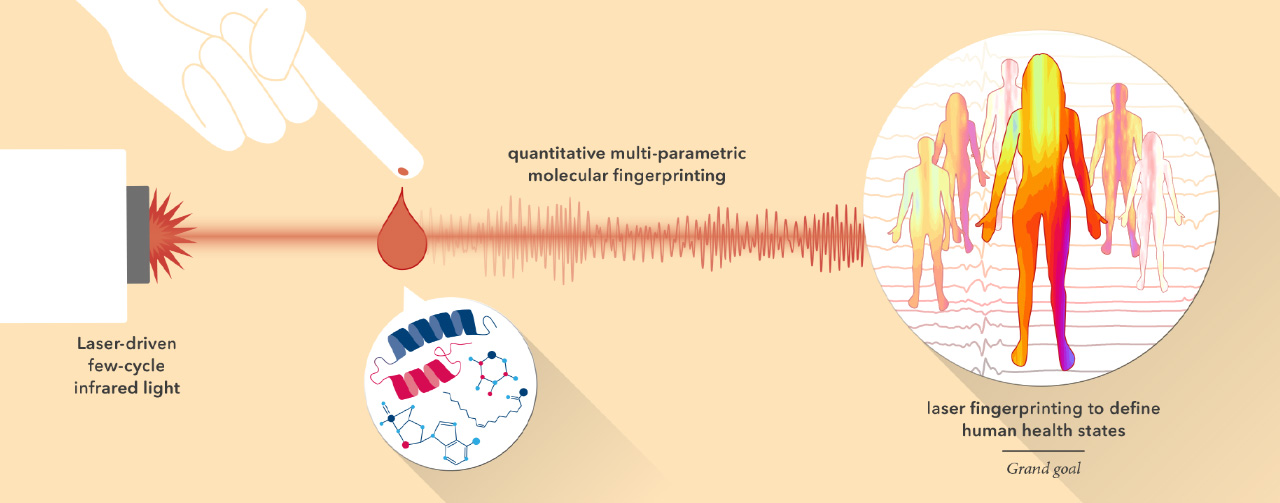
The levels, chemical modifications, and relative abundance of organic molecules circulating in systemic bioliquids serve as direct indicators of human physiological health. Leveraging broadband optics, ultrafast sources, and precision femtosecond-attosecond field-resolving metrologies of attoworld, …

more

meet our team

join us

We are always on the look for bright minds that wish to share their passion with us.

If you are a student or a laser scientist, a specialist in molecular sciences, a physician, a nurse, an engineer, or a data analyst – if you share the motivation to devise new approaches for quantifying the molecules of life to improve human health – do get in touch with us!

Contact:
Dr. Mihaela Žigman
Email: mihaela.zigman@mpq.mpg.de


  • Ph.D. // Post-Doc // Mining of molecular datasets for improved diagnostics of human health

    For candidates with backgrounds in informatics, bioinformatics, data engineering and analytics, computational physics or related fields

    About the BIRD team: The BIRD team is based at the Chair of Experimental Physics at Ludwig-Maximilians-Universität München (LMU), the Max-Planck-Institute of Quantum Optics (MPQ), and LMU’s Medical Faculty aiming to pursue an interdisciplinary research program at the interface of spectroscopy, machine learning, and medicine.

    more

    Blood drop graphic

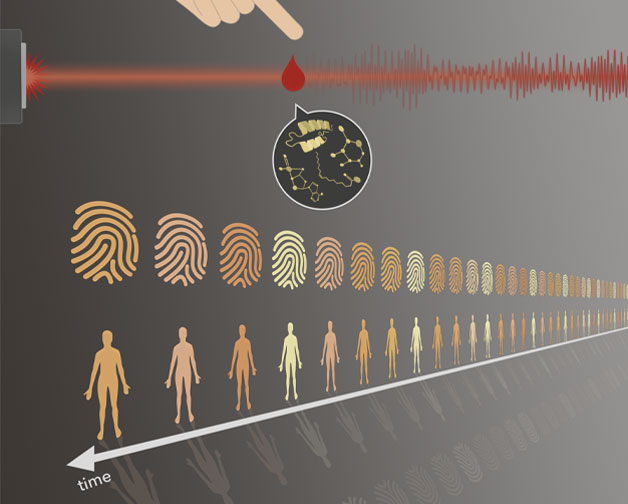
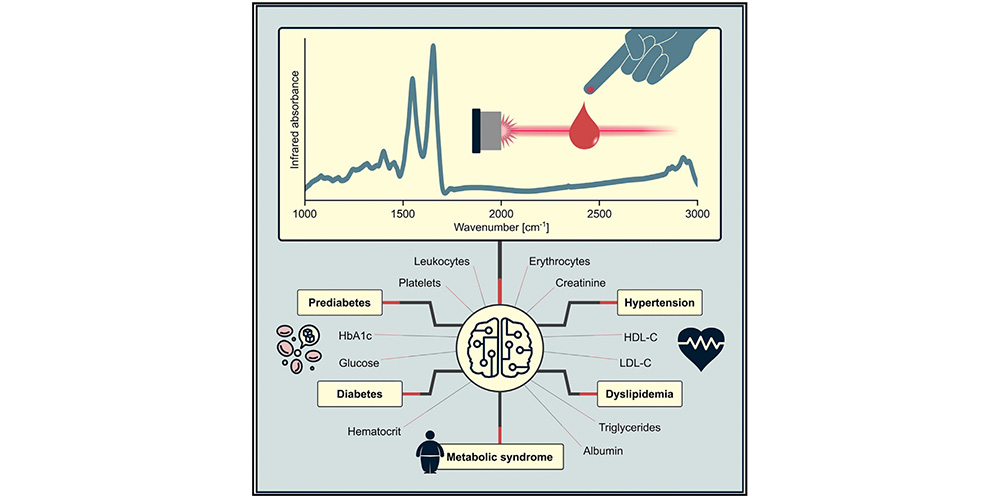
    Our research combines advanced InfraRed spectroscopy technologies with multi-omics, clinical diagnostics, and computational data analyses to develop novel molecular fingerprinting methods for human health assessment and early disease detection. The research builds on several clinical studies for which thousands of individuals contribute blood samples, resulting in rapidly growing datasets with rich molecular measurements and detailed clinical characterization. We are an interdisciplinary team with expertise spanning physics, data science, molecular science, and clinical research. Our main question is to understand how subtle molecular changes in blood relate to health states, disease onset, and longitudinal health trajectories, with applications in common diseases and cancer. To integrate our findings and generate new predictions and hypotheses, we use machine learning and systems analysis frameworks. Further information is available at www.attoworld.de/bird

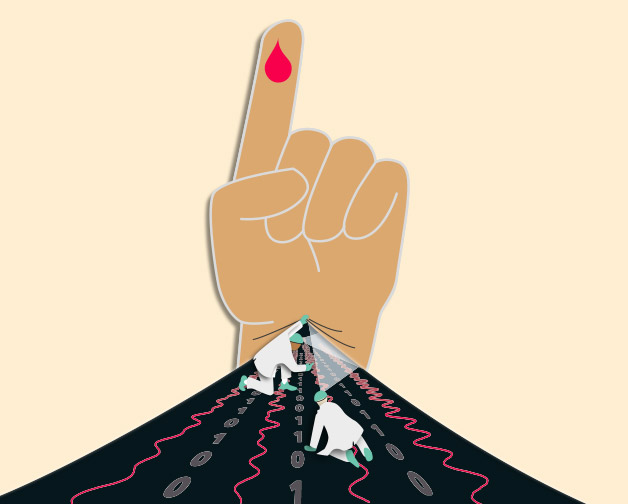
    Research area: Projects will focus on analysis of large-scale molecular datasets applying machine learning and data analysis. Research directions include the development of robust approaches for data standardization, improving model generalization across heterogeneous datasets, and extracting clinically meaningful insights from complex molecular data.

    Your profile:

    1. a strong academic background in informatics, bioinformatics, data engineering and analytics, statistics, computational physics, or a related discipline;
    2. solid expertise in statistics, machine learning, or data analytics;
    3. programming experience, ideally in Python;
    4. strong analytical and problem-solving abilities;
    5. a genuine interest in interdisciplinary biomedical research.

    Prior experience in molecular biology, biophysics, or chemistry is advantageous but not essential. More important is the motivation to work across disciplines and to engage with biologically and clinically relevant questions. We value diversity and strongly encourage applications from all qualified individuals.

    We offer:

    1. a friendly, vibrant, and collaborative environment with regular seminars, journal clubs, core lab funding;
    2. extensive collaborative opportunities with other lab members, labs, and across institutes;
    3. support in developing leadership, computational, and experimental skills;
    4. structured mentoring, with opportunities to co-supervise, lead projects, and help shape the group’s scientific direction.

    Applications, including a letter of motivation, a CV and the names and contact details of two referees should be sent directly to Mihaela Zigman and Tarek Eissa (mihaela.zigman@mpq.mpg.de; tarek.eissa@mpq.mpg.de).

    The group is based at Garching Forschungszentrum. For PhD applicants, formal supervision can be arranged through LMU Physics or TUM School of Computation Information and Technology (CIT).

    Relevant publications:

    Download: Job Description (PDF)

    less

  • M.Sc. // Master’s Thesis Opportunity in Infrared Diagnostics

    Join the Broadband Infrared Diagnostics (BIRD) team - a collaboration between the Ludwig-Maximilians-Universität München (LMU) and the Max-Planck-Institut für Quantenoptik (MPQ) at the attoworld laboratories in Garching - to help develop the next generation of spectroscopic avenues for molecular profiling in biomedical diagnostics.

    more

    Blood drop

    Required qualifications:

    1. Bachelor’s degree in chemistry, biochemistry, analytical sciences, biotechnology, biology or closely related fields;
    2. Solid grounding in one or more of the above-mentioned fields;
    3. Fluent English and strong communication skills;
    4. A proactive, enthusiastic approach and ability to work well in a team.

    As a Master’s student with us, you will:
    1. Develop strategies and workflows for analytical preparation of blood-based samples;/li>
    2. Apply infrared spectroscopy methods
    3. Develop and integrate spectroscopic optical techniques with modern analytical-chemicalworkflows
    4. Leverage machine learning approaches to analyze “infrared molecular fingerprints”
    5. Learn from team-efforts of a dynamic, interdisciplinary, and international research group

    Bonus points for:
    1. Previous biological or chemical lab experience (internships, Bachelor’s thesis etc.);
    2. Hands-on experience with experimental spectroscopy setting (e.g. UV/Vis spectroscopy,Raman, infrared or similar), blood-based analytics or data analyses;
    3. Familiarity with chromatographic and/or spectroscopic instrumentation or machine learningworkflows

    What we offer:
    1. A broad range of hands-on activities and experiences in a fast-evolving research area;
    2. Mentorship and collaboration with leading experts in infrared medical spectroscopy;
    3. Integration into a larger international and interdisciplinary research programm;
    4. A long-term perspective for motivated candidates.

    If you’re eager to push the boundaries of infrared molecular fingerprinting and contribute to innovative biomedical diagnostics, we are looking forward to hear from you! Students from LMU, TUM or other universities are also welcome, provided formal supervision at their home university is ensured.

    Learn more about our work:
    www.attoworld.de/bird

    Contact:

    Dr. Mihaela Zigman
    mihaela.zigman@mpq.mpg.de

    less

  • M.Sc. // Infrared Diagnostics of Human Health

    The Broadband Infrared Diagnostics (BIRD) group, at the Chair of Experimental Physics at Ludwig-
    Maximilians-Universität München (LMU) and the Max-Planck-Institute of Quantum Optics (MPQ) is
    combining femtosecond laser-based technologies, and molecular spectroscopy with computational data
    analyses for developing novel molecular infrared fingerprinting techniques to probe human health.

    For master students of Statistical Physics, Informatics, Physics, Biophysics or related.

    more
    BIRD Master

    We are a dynamic, interdisciplinary team of physicists, data scientists, biologists, and clinical experts, all working together to harness infrared spectroscopy for medical applications. By detecting subtle changes in the molecular composition of blood, we aim to capture and characterize early markers of health and disease (www.attoworld.de/bird; www.lasers4life.de).

    We invite highly motivated LMU students to join our team for a master’s thesis project. This opportunity focuses on applying machine learning and data analysis techniques to infrared spectroscopic data from human blood samples. The goal is to examine and advance infrared profiling for medical testing.

    Required qualifications:

    1. strong academic record;
    2. knowledge in statistics/machine learning/data analytics;
    3. knowledge of programming languages (e.g., Python);
    4. knowledge in biophysics/physical chemistry;
    5. interest in bio-medical applications;
    6. analytical, technical, and problem-solving skills.

    Our group is based at the Research Center in Garching (Forschungszentrum Garching, Section Physics of LMU, Am Coulombwall 1, 85748 Garching), accessible by public transport.

    Contact:

    Dr. Mihaela Zigman
    mihaela.zigman@mpq.mpg.de

    Tarek Eissa
    tarek.eissa@physik.uni-muenchen.de.

    less

A mobile version for attoworld.de is under construction.